
December 30, 2025 - By XGC Newsroom
The voluntary carbon market (VCM) is entering 2026 with stronger capital flows, higher retirement activity, and tighter integrity expectations. The market outlook differs by analyst methodology, but the directional trend is the same: higher scale, stricter quality requirements, and increasing institutional participation.
Market Size and Growth Outlook
Forecasts vary because different reports define market scope differently (for example, project type mix, transaction counting, and treatment of removals vs. avoidance). Even so, most analyses point to sustained expansion through 2030 and beyond.
- Conservative models emphasize high-integrity credits and show steady long-run growth.
- Aggressive models include broader issuance and transaction classes, projecting faster expansion.
- Mid-range estimates still imply a large, maturing market in 2026.
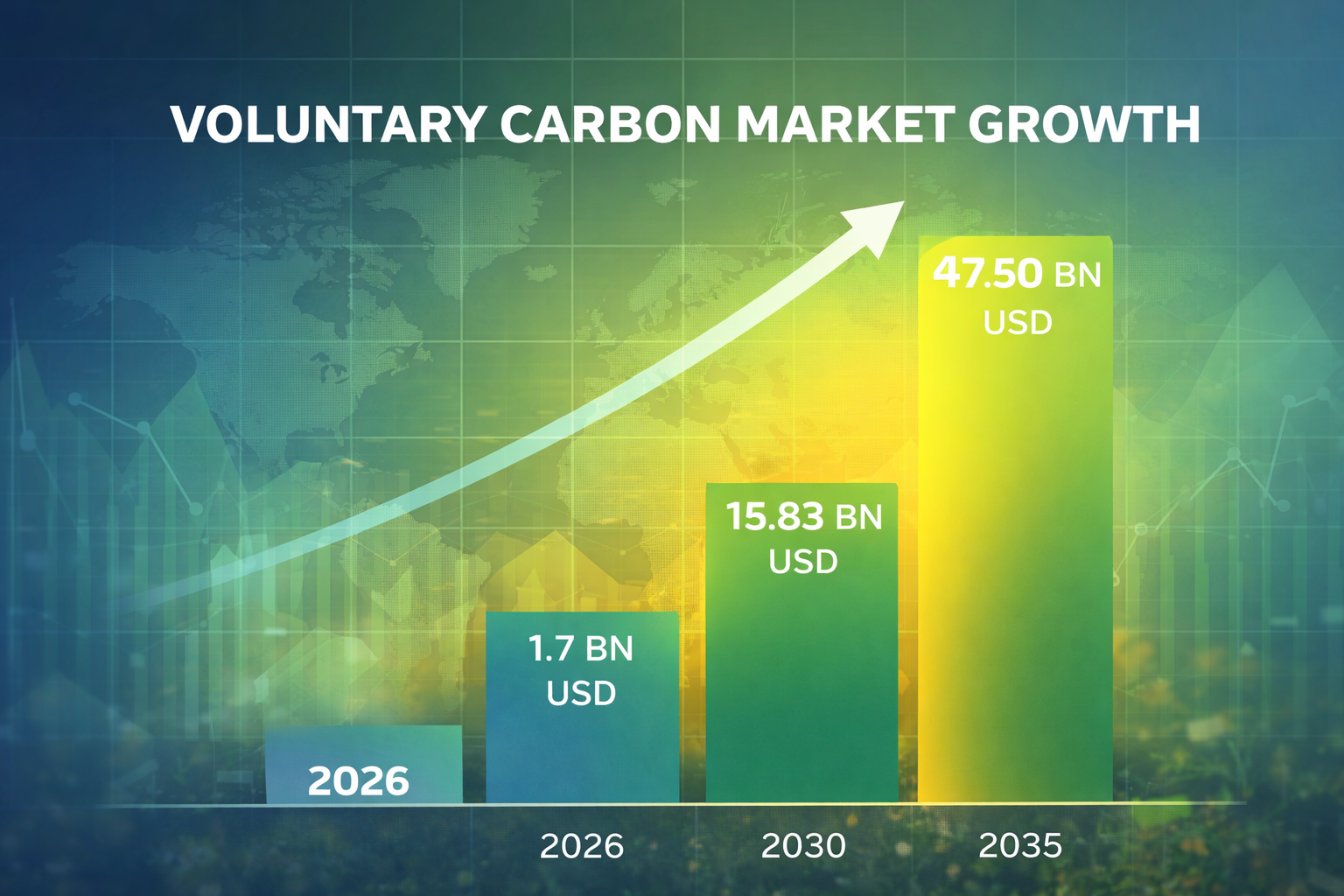
Conceptual market-growth illustration.
Segments Driving the Market
VCM growth is shaped by project composition, transaction structures, and end-user demand.
- Project Types: Renewable energy remains a major base segment, while removals continue to gain strategic value.
- Transaction Mix: Mixed portfolios (avoidance + reduction + removal) are increasingly used to balance price and durability.
- End Users: Private-sector buyers remain the largest group, with utilities, transport, industrials, and consumer-facing brands expanding use cases.
What Is Changing in 2026
- Integrity standards: Buyers are prioritizing verifiable, audit-ready credits over low-cost opaque supply.
- Digital MRV adoption: Satellite, IoT, and workflow automation reduce verification latency and improve confidence.
- Capital market integration: Structured products, funds, and carbon-linked financing are increasing liquidity.
- Regional divergence: North America remains a large demand center, Europe drives quality and disclosure pressure, and Asia-Pacific is expanding rapidly in both supply and demand.
Risk Factors and Friction Points
The market still faces meaningful headwinds:
- Price volatility across credit classes
- Regulatory fragmentation across jurisdictions
- Quality disputes and greenwashing risk
- Supply tightness for premium removals
XGCERP Integration: Integrity by System Design
In this environment, value increasingly follows traceability and governance. XGCERP is positioned as a national-grade operating layer that connects registry data, methodology logic, and compliance workflows into one controlled system.
- Registry connectivity: Integration with major registries and evolving national frameworks.
- Methodology-aware AI: Automated handling of baseline calculations, leakage checks, and issuance controls.
- Digital MRV: Continuous data ingestion from geospatial and operational signals.
- Ledger-level provenance: Immutable transaction histories to support audits, tokenization, and cross-market trust.
The practical outcome is reduced counterparty risk, better credit-level transparency, and faster operational cycles for developers, buyers, and public-sector participants.
Conclusion
The VCM in 2026 is less about speculative volume and more about trustworthy execution. The winners are likely to be those who combine credible project pipelines with transparent governance and robust digital infrastructure. As policy pressure and institutional scrutiny increase, system-level integrity becomes a competitive requirement rather than an optional feature.
Source article: https://xgccorp.com/news/news-xgc-25-12-30.html
Referenced sources in the source article include:


